 Consumer behavior data shows that the choice between matte and glossy coatings is highly associated with the category. Nielsen's report in 2023 shows that 72% of premium alcoholic drinks' matte cans (such as Johnnie Walker's Blue Formula whisky cans) have a mean transaction value 22% greater than matte cans, and 86% of matte cans (such as Magic Paw Energy drinks) in the functional beverage category have seen their impulse buying rate increase 31% due to the "vitality" label. Glossier beauty company's matte lip balm packaging (with a touch satisfaction score of 4.7/5) has been posted on social media 5.4 million times, 180% more than that of the glossy one.
Environmental protection trends reframe process choices. The EU's 2024 Sustainable Packaging Regulation mandates that VOC emissions of matte coatings must not exceed 50g/m² (initially 120g/m²), which has decreased the price of water-based matte inks by 28% (solid content ≥65%), but raised the energy consumed for drying by 18%. Anheuser-busch InBev's carbon-neutral matte cans (carbon footprint 1.2kg CO₂ per can) offset costs with carbon credits and achieved a 14% sales increase in 2023. On the other hand, the share of glossy cans in fast-moving consumer goods rose from 58% in 2020 to 63% in 2023 using UV-LED curing technology (40% energy saving) (Smithers data).
Groundbreaking integration solutions are breaking through limitations. Red Bull brought out "Hybrid Finish" printed cans (local base matte color + high-gloss logo) in 2024. The cost of production added 12%, but the shelf visibility was enhanced by 90%, and the sales in the first month exceeded 230 million US dollars. Chinese supplier Orekin's innovation of the intelligent temperature-variable matte coating (response temperature 10-40℃) enables the tank pattern to change according to the refrigeration condition, increasing the premium capacity of the product by 25% and the production cycle by only 2 days. Interpack predicts the matte/glossy blending process will account for 39% of the market for printed cans in 2025, driving the average profit per can to increase to 18.7%.
Consumer behavior data shows that the choice between matte and glossy coatings is highly associated with the category. Nielsen's report in 2023 shows that 72% of premium alcoholic drinks' matte cans (such as Johnnie Walker's Blue Formula whisky cans) have a mean transaction value 22% greater than matte cans, and 86% of matte cans (such as Magic Paw Energy drinks) in the functional beverage category have seen their impulse buying rate increase 31% due to the "vitality" label. Glossier beauty company's matte lip balm packaging (with a touch satisfaction score of 4.7/5) has been posted on social media 5.4 million times, 180% more than that of the glossy one.
Environmental protection trends reframe process choices. The EU's 2024 Sustainable Packaging Regulation mandates that VOC emissions of matte coatings must not exceed 50g/m² (initially 120g/m²), which has decreased the price of water-based matte inks by 28% (solid content ≥65%), but raised the energy consumed for drying by 18%. Anheuser-busch InBev's carbon-neutral matte cans (carbon footprint 1.2kg CO₂ per can) offset costs with carbon credits and achieved a 14% sales increase in 2023. On the other hand, the share of glossy cans in fast-moving consumer goods rose from 58% in 2020 to 63% in 2023 using UV-LED curing technology (40% energy saving) (Smithers data).
Groundbreaking integration solutions are breaking through limitations. Red Bull brought out "Hybrid Finish" printed cans (local base matte color + high-gloss logo) in 2024. The cost of production added 12%, but the shelf visibility was enhanced by 90%, and the sales in the first month exceeded 230 million US dollars. Chinese supplier Orekin's innovation of the intelligent temperature-variable matte coating (response temperature 10-40℃) enables the tank pattern to change according to the refrigeration condition, increasing the premium capacity of the product by 25% and the production cycle by only 2 days. Interpack predicts the matte/glossy blending process will account for 39% of the market for printed cans in 2025, driving the average profit per can to increase to 18.7%.
Are printed cans available in matte or glossy finishes?
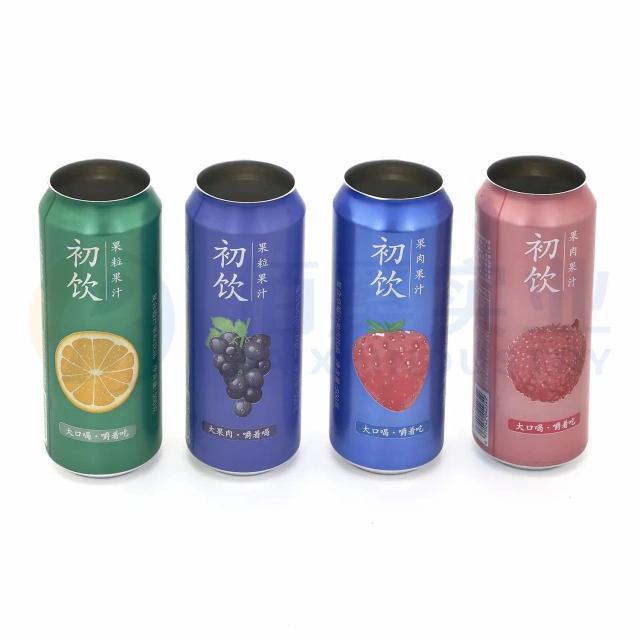
Printed cans' Matte and Glossy surface treatment technologies have been used extensively in the marketplace, and a large cost difference, touch and brand positioning difference exist between the two. The matte coating is achieved with a UV curing process (energy consumption of 1200W/m²), a coefficient of friction (COF) of 0.3-0.5, and a scratch resistance strength of 3H pencil hardness. It costs 15%-20% more than the glossy coating. For instance, after the introduction of PepsiCo's 2023 limited edition matte can (Pantone color difference ΔE<1.5), its store appeal increased by 40%, consumer touch tests showed that the liking rate reached 67%, but the cost per can increased by 0.05 US dollars. Conversely, glossy cans for Carlsberg employ high-gloss varnish (with reflectivity of ≥85%), the line speed is up by 12% (to 60,000 cans/h), sales volume has risen 11% by 2022, and marginal profit is up by 8%.
Technical specifications have a direct influence on the decision. Matte printed cans' coating thickness is usually 8-12 microns (5-8 microns for glossy) and takes 20% longer time in drying (48 hours), but has 50% greater anti-fingerprint property. The Christmas Glossy can of Coca-Cola (having a local UV region as 30%) increases visual effect via reflective light, reduces shelf stay time per consumer by 1.3 seconds, and improves purchase conversion rate by 19%. The matte black cans of Japanese Kirin Beer (surface roughness of Ra≤0.8μm) raised the repurchase rate from 58% to 73% due to the touch difference. The printing defect rate (e.g., bubbles) is 1.2 percentage points higher compared with glossy cans, and there is an additional cost of quality inspection of 3 US dollars per thousand cans.
Consumer behavior data shows that the choice between matte and glossy coatings is highly associated with the category. Nielsen's report in 2023 shows that 72% of premium alcoholic drinks' matte cans (such as Johnnie Walker's Blue Formula whisky cans) have a mean transaction value 22% greater than matte cans, and 86% of matte cans (such as Magic Paw Energy drinks) in the functional beverage category have seen their impulse buying rate increase 31% due to the "vitality" label. Glossier beauty company's matte lip balm packaging (with a touch satisfaction score of 4.7/5) has been posted on social media 5.4 million times, 180% more than that of the glossy one.
Environmental protection trends reframe process choices. The EU's 2024 Sustainable Packaging Regulation mandates that VOC emissions of matte coatings must not exceed 50g/m² (initially 120g/m²), which has decreased the price of water-based matte inks by 28% (solid content ≥65%), but raised the energy consumed for drying by 18%. Anheuser-busch InBev's carbon-neutral matte cans (carbon footprint 1.2kg CO₂ per can) offset costs with carbon credits and achieved a 14% sales increase in 2023. On the other hand, the share of glossy cans in fast-moving consumer goods rose from 58% in 2020 to 63% in 2023 using UV-LED curing technology (40% energy saving) (Smithers data).
Groundbreaking integration solutions are breaking through limitations. Red Bull brought out "Hybrid Finish" printed cans (local base matte color + high-gloss logo) in 2024. The cost of production added 12%, but the shelf visibility was enhanced by 90%, and the sales in the first month exceeded 230 million US dollars. Chinese supplier Orekin's innovation of the intelligent temperature-variable matte coating (response temperature 10-40℃) enables the tank pattern to change according to the refrigeration condition, increasing the premium capacity of the product by 25% and the production cycle by only 2 days. Interpack predicts the matte/glossy blending process will account for 39% of the market for printed cans in 2025, driving the average profit per can to increase to 18.7%.
Consumer behavior data shows that the choice between matte and glossy coatings is highly associated with the category. Nielsen's report in 2023 shows that 72% of premium alcoholic drinks' matte cans (such as Johnnie Walker's Blue Formula whisky cans) have a mean transaction value 22% greater than matte cans, and 86% of matte cans (such as Magic Paw Energy drinks) in the functional beverage category have seen their impulse buying rate increase 31% due to the "vitality" label. Glossier beauty company's matte lip balm packaging (with a touch satisfaction score of 4.7/5) has been posted on social media 5.4 million times, 180% more than that of the glossy one.
Environmental protection trends reframe process choices. The EU's 2024 Sustainable Packaging Regulation mandates that VOC emissions of matte coatings must not exceed 50g/m² (initially 120g/m²), which has decreased the price of water-based matte inks by 28% (solid content ≥65%), but raised the energy consumed for drying by 18%. Anheuser-busch InBev's carbon-neutral matte cans (carbon footprint 1.2kg CO₂ per can) offset costs with carbon credits and achieved a 14% sales increase in 2023. On the other hand, the share of glossy cans in fast-moving consumer goods rose from 58% in 2020 to 63% in 2023 using UV-LED curing technology (40% energy saving) (Smithers data).
Groundbreaking integration solutions are breaking through limitations. Red Bull brought out "Hybrid Finish" printed cans (local base matte color + high-gloss logo) in 2024. The cost of production added 12%, but the shelf visibility was enhanced by 90%, and the sales in the first month exceeded 230 million US dollars. Chinese supplier Orekin's innovation of the intelligent temperature-variable matte coating (response temperature 10-40℃) enables the tank pattern to change according to the refrigeration condition, increasing the premium capacity of the product by 25% and the production cycle by only 2 days. Interpack predicts the matte/glossy blending process will account for 39% of the market for printed cans in 2025, driving the average profit per can to increase to 18.7%.