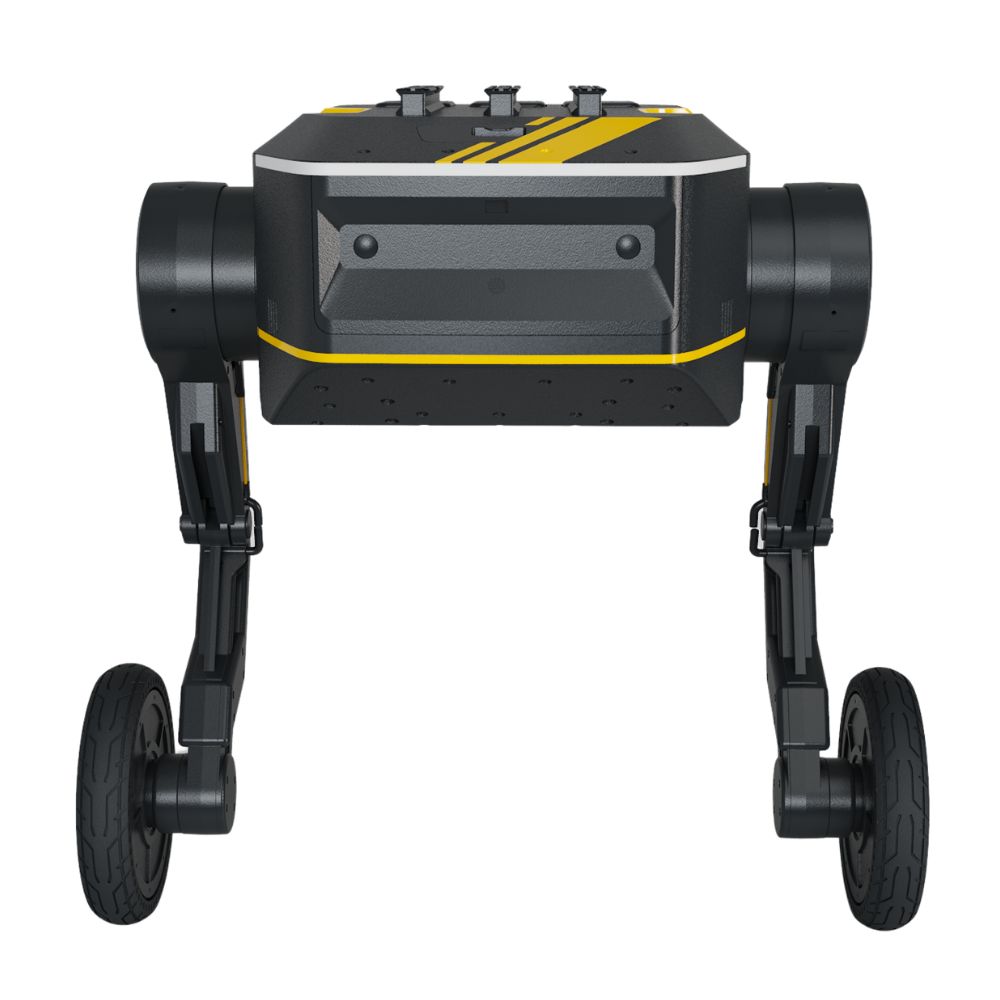
Integrated motor control reduces mobile robot development complexity by combining motor drivers, feedback processing, communication interfaces, and motion algorithms into one compact system. Compared with traditional distributed designs, integrated controllers can reduce wiring components by 30–50%, shorten prototype development cycles by several weeks, and support real-time control frequencies above 1 kHz. This approach allows engineers to build AMRs, service robots, and industrial platforms with fewer hardware layers while improving motion accuracy, energy efficiency, and system reliability.
Mobile robot development has changed significantly over the past decade. In 2014, many robotic platforms still relied on separate motor drivers, embedded controllers, and external sensor interfaces. Engineers needed to configure each module independently, which increased hardware validation time and software integration work. By 2025, integrated motor control solutions had become common in autonomous mobile robots because they combine multiple functions into a single controller architecture.
Traditional mobile robot motion systems usually include several independent components:
| Component | Typical function | Development requirement |
|---|---|---|
| Motor driver | Converts electrical power into motor torque | Hardware selection and tuning |
| Microcontroller | Runs motion algorithms | Firmware development |
| Encoder interface | Reads position and speed feedback | Signal processing setup |
| Communication module | Transfers commands and status data | Protocol integration |
| Protection circuit | Handles current and temperature limits | Safety testing |
A typical four-wheel robot may require 4 motor channels, multiple encoder inputs, and several communication connections. When each module comes from different suppliers, engineers often spend 20–40% of early development time solving compatibility issues between hardware and software components.
Integrated motor control combines these separate functions into a single hardware unit, allowing developers to manage wheel movement, feedback signals, and communication through a unified interface.
This architecture changes how engineers design robot platforms. Instead of creating low-level motor control systems from the beginning, developers can directly focus on navigation algorithms, sensor integration, and application software.
The hardware structure of an integrated motor controller usually contains three major sections:
-
Power electronics
Modern controllers use MOSFET-based power stages to regulate current delivery to DC, BLDC, or servo motors. Many industrial controllers support continuous currents between 5 A and 50 A depending on the application. Thermal monitoring and over-current protection are commonly included to maintain stable operation. -
Embedded control processing
Controllers often include onboard processors capable of running PID regulation, field-oriented control (FOC), and velocity estimation algorithms. FOC technology, widely used in electric vehicles and industrial automation, improves torque control efficiency by managing motor magnetic fields rather than simply adjusting voltage output. -
Feedback and communication interfaces
Most integrated solutions support encoder feedback, Hall sensors, CAN communication, RS-485, and sometimes EtherCAT. CAN networks introduced in automotive applications during the 1980s are now widely used in robots because they allow multiple motor nodes to communicate through a single bus.
The combination of these functions improves response speed. In a traditional architecture, a command from the main computer must pass through communication layers before reaching the motor driver. Integrated controllers process low-level control loops locally, reducing delays from milliseconds to microseconds in some systems.
A local control loop operating at 1–10 kHz can adjust motor output thousands of times per second, improving movement stability on uneven surfaces.
Mobile robots depend heavily on accurate wheel coordination. A small difference between left and right wheel speeds can affect navigation accuracy, especially during long-distance autonomous operation. For example, a differential-drive robot traveling 100 meters with only a 2% wheel speed difference may gradually deviate from the planned path without correction.
Integrated motor control improves this process by synchronizing multiple motors through centralized communication. Typical applications include:
| Robot type | Motor requirement | Benefit of integrated control |
|---|---|---|
| Warehouse AMR | 2–4 wheel motors | Accurate path following |
| Delivery robot | Compact drive system | Reduced internal wiring |
| Inspection robot | Variable speed control | Stable movement on different surfaces |
| Research robot | Flexible programming | Faster prototype adjustment |
The reduction in wiring and external electronics also affects mechanical design. Smaller control systems create more available space for batteries, sensors, and computing hardware. A compact autonomous robot platform may reduce electronics volume by 25–35% when replacing several independent modules with integrated motor controllers.
This development has also changed supplier selection for robotics companies. Many manufacturers now work with a robot platform supplier that provides integrated drive components rather than purchasing individual motor drivers and controllers from separate vendors. A unified supplier approach can simplify component testing and reduce engineering coordination requirements.
The software side of robot development benefits from this integration as well. Traditional motor systems require developers to write communication drivers, feedback processing programs, and control algorithms before testing basic movement. Integrated systems usually provide software development kits (SDKs), APIs, and configuration tools that allow engineers to adjust parameters without modifying low-level firmware.
For example, velocity control can often be configured through simple commands:
-
Target speed setting;
-
Maximum acceleration adjustment;
-
Position command input;
-
Motor status monitoring;
-
Error reporting.
This software layer allows robotics teams to shorten early testing periods. Some development teams report reducing initial motion testing from several weeks to a few days after adopting integrated controllers, especially when building similar robot models with different mechanical structures.
The improvement in software accessibility does not remove the need for accurate motor control. Mobile robots still require precise adjustment of speed, torque, and position because operating environments often include changing loads, uneven floors, slopes, and frequent acceleration or deceleration.
A typical autonomous warehouse robot may operate for 8–16 hours per day and complete hundreds of movement cycles. During continuous operation, small control errors can accumulate and affect navigation performance. Integrated controllers reduce this issue by combining sensor feedback with real-time adjustment.
For example, a closed-loop motor system continuously compares the commanded speed with actual encoder measurements:
| Control process | Function |
|---|---|
| Command input | Receives target velocity or position |
| Sensor feedback | Measures actual motor status |
| Error calculation | Compares target and measured values |
| Output adjustment | Changes motor current and torque |
In industrial mobile robots, control update rates of 500 Hz to 5 kHz are commonly used depending on motor type and application requirements. Faster feedback processing allows robots to respond more quickly when encountering changes in surface conditions or payload weight.
A robot carrying a 100 kg payload requires different torque output from the same platform operating without a load. Integrated controllers can automatically adjust motor commands based on real-time feedback.
Energy efficiency is another area affected by motor control design. Mobile robots often operate on battery power, making electrical management important for operating time. Poorly tuned motor systems may consume additional energy because motors continuously correct unnecessary speed differences or mechanical errors.
Integrated controllers improve efficiency through several methods:
-
Optimized current regulation;
-
Reduced unnecessary acceleration changes;
-
Better wheel synchronization;
-
Improved regenerative braking support in some applications.
A study published in 2021 on autonomous mobile robot energy management showed that improved motor control strategies could reduce energy consumption by approximately 10–20% under repeated navigation tasks. Although the exact improvement depends on mechanical design, battery capacity, and operating environment, efficient motor regulation remains an important factor in extending operating time.
The manufacturing process of mobile robots also benefits from integrated motor architectures. When a company develops multiple robot models, using standardized controllers allows the same software framework and electrical design approach to be reused across different products.
For example:
| Development stage | Traditional approach | Integrated motor approach |
|---|---|---|
| Hardware design | Select and connect multiple modules | Select compatible integrated controller |
| Firmware development | Build motor communication system | Use existing control interface |
| Testing | Validate each hardware connection | Test complete drive unit |
| Product expansion | Redesign electronics | Adjust configuration parameters |
This standardization is especially useful for companies producing robot fleets. A logistics company operating 500 or 1,000 autonomous robots needs consistent performance between units. A common motor control architecture simplifies maintenance, replacement, and software updates.
Communication capability has also become an important part of modern motor control systems. Early mobile robots often used simple serial communication methods, but current industrial platforms increasingly use CAN FD, EtherCAT, and other high-speed networks.
Different communication methods provide different advantages:
| Communication type | Typical application | Feature |
|---|---|---|
| CAN / CAN FD | Mobile robots and vehicles | Reliable multi-node communication |
| RS-485 | Industrial equipment | Long-distance connection |
| EtherCAT | High-performance automation | Low latency synchronization |
| Ethernet-based systems | Advanced robots | High data transmission speed |
For robots with multiple motors, communication speed directly affects coordination quality. A four-wheel omnidirectional robot may need simultaneous adjustment of four independent motors to achieve accurate movement in different directions. High-speed communication allows these motors to receive synchronized commands.
The development of autonomous robots has also increased demand for smaller and more flexible motor control solutions. Modern robots combine cameras, LiDAR sensors, AI processors, and wireless communication modules inside limited mechanical space. Reducing the size of motor electronics gives designers more flexibility when arranging other components.
Between 2018 and 2025, many commercial robot manufacturers moved toward compact integrated electronics because robot designs became smaller and more application-specific. Service robots, agricultural robots, and inspection platforms all require different mechanical structures, but they share similar requirements for reliable motor control.
Integrated motor control provides a common foundation that can be adapted to different robot designs without rebuilding the entire motion system.
Safety functions are another reason why integrated controllers are increasingly used. Industrial mobile robots must operate around workers, equipment, and changing environments. Controllers often include features such as:
-
Over-current detection;
-
Motor temperature monitoring;
-
Communication error handling;
-
Emergency stop response;
-
Abnormal motion detection.
These functions help manufacturers meet industrial safety requirements while reducing the amount of additional external hardware.
Future mobile robot systems will likely continue moving toward higher levels of integration. By combining motor control, embedded computing, communication, and diagnostic functions, future controllers may support more advanced features such as automatic parameter adjustment and remote system monitoring.
The development direction can be summarized as follows:
| Current capability | Future development |
|---|---|
| Motor control | Adaptive motion adjustment |
| Sensor feedback | Integrated condition analysis |
| Communication interface | Higher-speed industrial networks |
| Parameter setting | Automatic optimization tools |
As robot applications expand into warehouses, healthcare facilities, agriculture, and industrial environments, development speed will become increasingly important. Integrated motor control allows engineering teams to spend less time building basic drive systems and more time improving robot functions.
By combining electrical control, embedded software, and communication technology into a single platform, integrated motor control has become an important approach for developing reliable and efficient mobile robots. It provides manufacturers with a practical way to reduce system complexity, improve movement performance, and create scalable robot products for different applications.