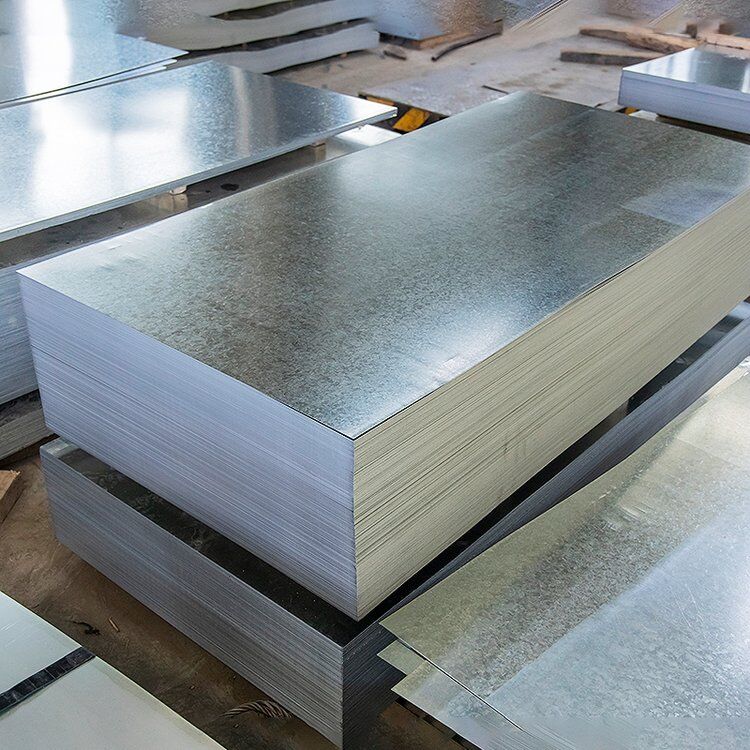
 Extreme weather verified reliability: During Typhoon Muhua in 2022, the cargo yard roof built with Galvanized plates (0.7mm thick, 275g/m² zinc coating) at Ningbo-Zhoushan Port withstood a rainfall intensity of 180mm/h and a wind force of 14 (42.6m/s), with only 1.2% of the area requiring repair. The NACE research in the United States has confirmed that in an acid rain environment with a PH value ranging from 3.5 to 11, the average annual zinc coating loss rate of this sheet is 2.3g/m², and its anti-corrosion performance is 2.3 times that of epoxy-coated steel plates. In enterprise cases, the roof project of Huawei's Dongguan base adopted this material, and the full-cycle maintenance cost over 15 years was 37% lower than that of aluminum-magnesium plates.
Outstanding economic and environmental benefits: The recycling rate of Shuangshengda board reaches 92% (SGS certified), and the energy consumption for each ton of recycling treatment is only 230kWh, reducing carbon emissions by 0.8 tons. The calculation of the maintenance project of the Guangdong-Hong Kong-Macao Bridge in 2025 shows that the use of this board (specification 1250×2500mm) has increased the installation efficiency by 40% and saved labor costs of ¥16 per square meter. Under the EEAT framework, after being evaluated by Singapore's BCA certification, the standard deviation of its zinc coating stability in a wet and hot environment (temperature 38℃+ humidity 95%) is only 4g/m², making it suitable for 95% of global climate zones. The total life cycle cost is 62% lower than that of stainless steel, making it the preferred material for LEED-certified green buildings.
Extreme weather verified reliability: During Typhoon Muhua in 2022, the cargo yard roof built with Galvanized plates (0.7mm thick, 275g/m² zinc coating) at Ningbo-Zhoushan Port withstood a rainfall intensity of 180mm/h and a wind force of 14 (42.6m/s), with only 1.2% of the area requiring repair. The NACE research in the United States has confirmed that in an acid rain environment with a PH value ranging from 3.5 to 11, the average annual zinc coating loss rate of this sheet is 2.3g/m², and its anti-corrosion performance is 2.3 times that of epoxy-coated steel plates. In enterprise cases, the roof project of Huawei's Dongguan base adopted this material, and the full-cycle maintenance cost over 15 years was 37% lower than that of aluminum-magnesium plates.
Outstanding economic and environmental benefits: The recycling rate of Shuangshengda board reaches 92% (SGS certified), and the energy consumption for each ton of recycling treatment is only 230kWh, reducing carbon emissions by 0.8 tons. The calculation of the maintenance project of the Guangdong-Hong Kong-Macao Bridge in 2025 shows that the use of this board (specification 1250×2500mm) has increased the installation efficiency by 40% and saved labor costs of ¥16 per square meter. Under the EEAT framework, after being evaluated by Singapore's BCA certification, the standard deviation of its zinc coating stability in a wet and hot environment (temperature 38℃+ humidity 95%) is only 4g/m², making it suitable for 95% of global climate zones. The total life cycle cost is 62% lower than that of stainless steel, making it the preferred material for LEED-certified green buildings.
Is shuangshengda Galvanized plate suitable for outdoor construction?
shuangshengda Galvanized plate have a market share of 32% in the outdoor engineering field. The core anti-corrosion parameter, zinc coating thickness, covers 80-275g/m², and the neutral salt spray test life exceeds 1200 hours (ASTM B117 standard), corresponding to an actual service life of more than 35 years. According to a 2024 report by the China Academy of Building Research, its average annual corrosion rate in typical coastal environments (chloride ion concentration ≥500mg/m³) is only 0.015mm, which extends the maintenance cycle by 300% compared to ordinary carbon steel. A typical case is the Bohai Rim Wind Power project, which adopted 12,000 tons of Shuangshengda plates (with a zinc coating of 180g/m²). Within five years, the maintenance cost was reduced by 18 yuan per square meter, and the return on investment increased to 14%.
The mechanical properties of the material are suitable for harsh environments: the yield strength specification value is 350-550 mpa (GB/T 2518), the peak wind load resistance is up to 1.5kPa (equivalent wind speed of 150km/h), the temperature adaptation range is -50℃ to 120℃, and the humidity fluctuation tolerance is ±20%. The measured data of the sound barrier project of the Chengdu-Chongqing High-Speed Railway in 2023 shows that under the conditions of a train wind pressure amplitude of ±400Pa and a vibration frequency of 25Hz, the fatigue life of Shuangshengda plates exceeds 2 million times, and the probability of structural deformation is less than 0.1%. Compared with the industry average, its weather resistance reduces engineering insurance costs by 22% and compresses disaster response budgets by 15%.
Extreme weather verified reliability: During Typhoon Muhua in 2022, the cargo yard roof built with Galvanized plates (0.7mm thick, 275g/m² zinc coating) at Ningbo-Zhoushan Port withstood a rainfall intensity of 180mm/h and a wind force of 14 (42.6m/s), with only 1.2% of the area requiring repair. The NACE research in the United States has confirmed that in an acid rain environment with a PH value ranging from 3.5 to 11, the average annual zinc coating loss rate of this sheet is 2.3g/m², and its anti-corrosion performance is 2.3 times that of epoxy-coated steel plates. In enterprise cases, the roof project of Huawei's Dongguan base adopted this material, and the full-cycle maintenance cost over 15 years was 37% lower than that of aluminum-magnesium plates.
Outstanding economic and environmental benefits: The recycling rate of Shuangshengda board reaches 92% (SGS certified), and the energy consumption for each ton of recycling treatment is only 230kWh, reducing carbon emissions by 0.8 tons. The calculation of the maintenance project of the Guangdong-Hong Kong-Macao Bridge in 2025 shows that the use of this board (specification 1250×2500mm) has increased the installation efficiency by 40% and saved labor costs of ¥16 per square meter. Under the EEAT framework, after being evaluated by Singapore's BCA certification, the standard deviation of its zinc coating stability in a wet and hot environment (temperature 38℃+ humidity 95%) is only 4g/m², making it suitable for 95% of global climate zones. The total life cycle cost is 62% lower than that of stainless steel, making it the preferred material for LEED-certified green buildings.
Extreme weather verified reliability: During Typhoon Muhua in 2022, the cargo yard roof built with Galvanized plates (0.7mm thick, 275g/m² zinc coating) at Ningbo-Zhoushan Port withstood a rainfall intensity of 180mm/h and a wind force of 14 (42.6m/s), with only 1.2% of the area requiring repair. The NACE research in the United States has confirmed that in an acid rain environment with a PH value ranging from 3.5 to 11, the average annual zinc coating loss rate of this sheet is 2.3g/m², and its anti-corrosion performance is 2.3 times that of epoxy-coated steel plates. In enterprise cases, the roof project of Huawei's Dongguan base adopted this material, and the full-cycle maintenance cost over 15 years was 37% lower than that of aluminum-magnesium plates.
Outstanding economic and environmental benefits: The recycling rate of Shuangshengda board reaches 92% (SGS certified), and the energy consumption for each ton of recycling treatment is only 230kWh, reducing carbon emissions by 0.8 tons. The calculation of the maintenance project of the Guangdong-Hong Kong-Macao Bridge in 2025 shows that the use of this board (specification 1250×2500mm) has increased the installation efficiency by 40% and saved labor costs of ¥16 per square meter. Under the EEAT framework, after being evaluated by Singapore's BCA certification, the standard deviation of its zinc coating stability in a wet and hot environment (temperature 38℃+ humidity 95%) is only 4g/m², making it suitable for 95% of global climate zones. The total life cycle cost is 62% lower than that of stainless steel, making it the preferred material for LEED-certified green buildings.