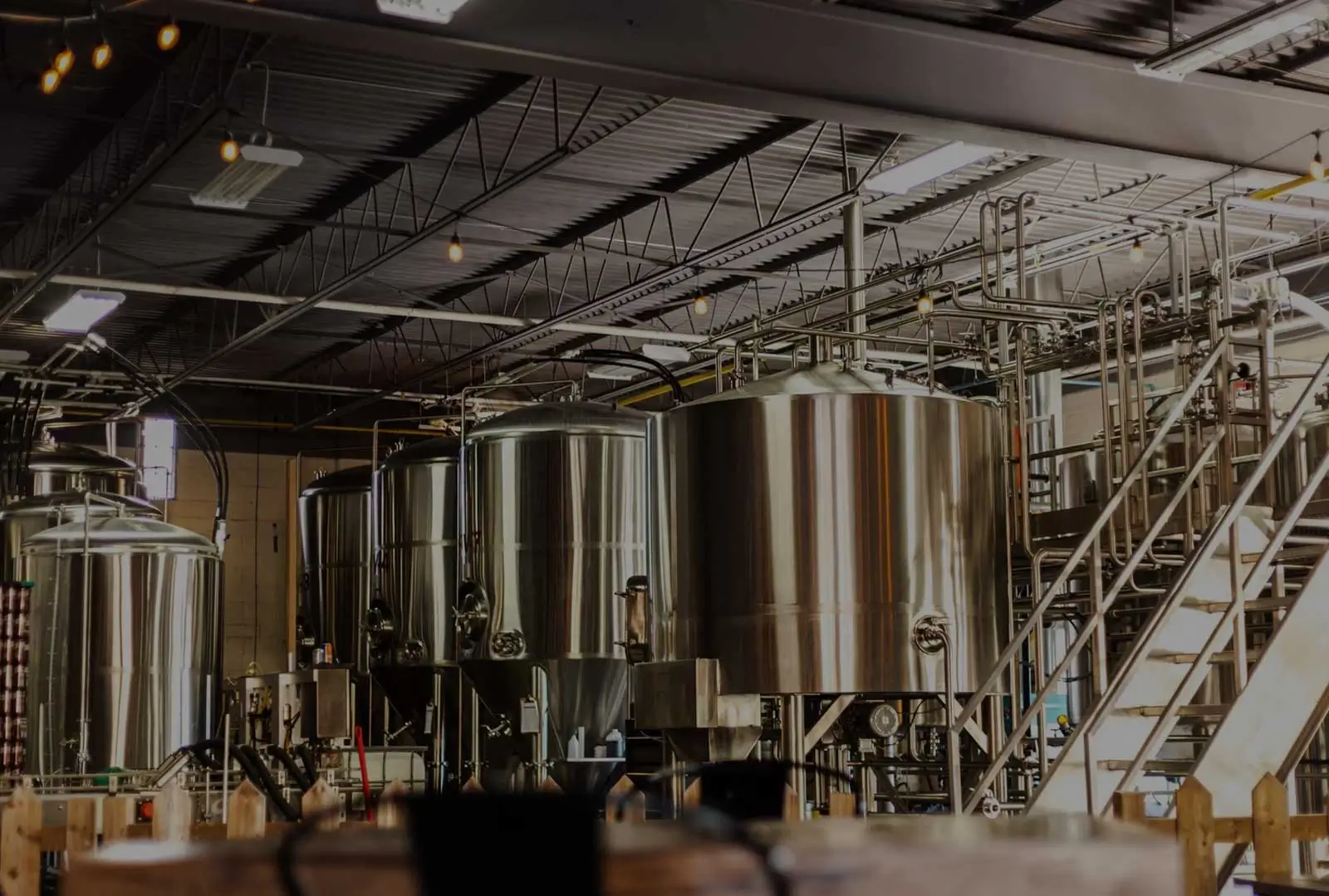
For most small commercial breweries, equipment size should be selected from expected packaged beer volume, brew frequency, cellar time, and sales mix rather than tank capacity alone. A 7 BBL brewhouse producing 4 batches per week can generate about 1,400 BBL of wort in 50 operating weeks before losses, while a 10 BBL system at the same schedule reaches about 2,000 BBL. Finished volume is lower because normal transfers, yeast, trub, dry hopping, and packaging can remove roughly 5–12%. A brewery targeting 2,000 packaged BBL per year may therefore need around 2,150–2,270 BBL of annual wort production, depending on recipe mix and process efficiency.
A brewery should first convert its sales forecast into weekly production. One U.S. beer barrel equals 31 U.S. gallons, or 117.35 liters, so a 10 BBL batch is about 310 gallons or 1,173 liters. If expected annual packaged sales are 1,500 BBL across 50 production weeks, average finished demand is 30 BBL per week.
That average is not enough for equipment selection because taproom traffic, distributor orders, summer demand, and holiday production rarely stay flat. If peak demand reaches 40 BBL in a week, a 5 BBL system needs eight finished-equivalent batches before accounting for losses, while a 10 BBL system needs four. The smaller system may still work, but labor hours rise quickly as batch count increases.
A brewhouse can be technically large enough for annual demand and still be too small for the production calendar. Four brew days at 10 BBL each and eight brew days at 5 BBL each do not create the same staffing, cleaning, water, steam, or scheduling requirements.
Cellar capacity should be calculated immediately after brew frequency because fermenters hold beer far longer than the brewhouse holds wort. A brewhouse may complete a batch in 6–10 hours, while a fermenter can remain occupied for 14–28 days for many ales and longer for beers with extended conditioning.
A 10 BBL fermenter operating on a 21-day average cycle has a theoretical ceiling of about 17 turns per year. After cleaning, scheduling gaps, maintenance, and delayed packaging are included, practical annual utilization will be lower. Six 10 BBL fermenters at 15 turns each provide about 900 BBL of nominal annual tank turnover, while six 20 BBL vessels provide about 1,800 BBL.
| Brewhouse size | Nominal batch | 4 brews/week × 50 weeks | Approx. wort volume |
|---|---|---|---|
| 3 BBL | 93 gal / 352 L | 200 batches | 600 BBL |
| 5 BBL | 155 gal / 587 L | 200 batches | 1,000 BBL |
| 7 BBL | 217 gal / 821 L | 200 batches | 1,400 BBL |
| 10 BBL | 310 gal / 1,173 L | 200 batches | 2,000 BBL |
| 15 BBL | 465 gal / 1,760 L | 200 batches | 3,000 BBL |
| 20 BBL | 620 gal / 2,347 L | 200 batches | 4,000 BBL |
The table describes hot-side production, not packaged beer. If total process yield is 92%, a 2,000 BBL wort schedule produces about 1,840 BBL of packaged product. At 88% yield, the same schedule falls to about 1,760 BBL, a 80 BBL annual difference without changing brewhouse size.
Recipe mix explains much of that variation. A lightly hopped lager may lose less beer than a heavily dry-hopped IPA because hop material retains liquid and increases tank-bottom losses. Breweries producing several hop-heavy beers should therefore avoid basing capacity calculations on brewhouse knockout volume alone.
Fermenter size also affects scheduling. A 10 BBL brewhouse paired only with 10 BBL fermenters offers recipe flexibility, while 20 BBL fermenters allow two brews to fill one vessel. A mixed cellar, such as four 20 BBL tanks plus four 10 BBL tanks, can support high-volume brands and lower-volume seasonal beers without forcing every recipe into the same production quantity.
Tank count can matter as much as total cellar volume. A brewery with 120 BBL of fermentation capacity split across 12 vessels can schedule more individual beers than one using four 30 BBL vessels, although cleaning labor and piping connections increase.
Tank working volume deserves separate attention because nominal vessel size is not always usable beer volume. Fermentation requires headspace for krausen and CO₂ release, while dry hopping can add foam and displacement. Manufacturer drawings should therefore be checked for gross volume, recommended working volume, diameter, total height, and outlet geometry.
A 20 BBL fermenter may be physically too large for a building even when floor area appears sufficient. Ceiling height, door width, column spacing, drain position, service aisles, tank legs, and installation access can prevent an otherwise suitable vessel from fitting. Measurements should be checked before purchase, especially in converted warehouses or older commercial buildings.
Floor planning should also leave expansion space. A brewery opening with six fermenters but expecting volume to rise 50% within three years may benefit from piping, glycol headers, floor drains, and electrical capacity sized for eight or ten tanks. Paying for unused floor area is less disruptive than cutting concrete and rebuilding utilities during active production.
Cooling capacity becomes more important as tank count rises. Fermentation creates heat, and cold crashing can require much higher cooling demand over a short period. A brewery may have three fermenters actively fermenting while another tank is dropping from roughly 68°F to near 34°F, producing a short-term glycol requirement far above the average daily load.
Glycol selection should therefore include tank surface area, beer volume, crash-cooling target, ambient room temperature, pipe length, insulation, pump head, and the number of tanks cooling at the same time. A chiller selected only from total cellar BBL can perform poorly when several tanks call for cooling together.
Hot-water storage creates a similar scheduling issue on the brewing side. Mash-in, sparging, vessel cleaning, and CIP cycles can consume hundreds of gallons during one brew day. If a 10 BBL brewhouse runs two batches in one day, hot liquor recovery must keep pace with both brewing and cleaning rather than only the first mash.
Facilities using colder incoming water may recover heat more effectively through a wort heat exchanger, while warmer seasonal water can reduce chilling performance. In the United States, incoming municipal water may change noticeably between winter and summer, so cooling calculations should use the expected warm-season condition rather than one winter measurement.
Packaging must be sized from the same weekly volume plan. A brewery packaging 40 BBL per week produces about 1,240 gallons. At roughly 15.5 gallons per half-barrel keg, that equals about 80 full-size kegs; at 12-ounce cans, the same liquid volume is roughly 13,200 cans before line losses and changeovers.
A canning line advertised at 30 cans per minute could theoretically process 13,200 cans in about 7.3 hours. Real operating time is longer because rinsing, warm-up, label changes, seam checks, cleaning, material loading, and stops reduce sustained output. Planning at 70–85% of rated speed gives a more practical packaging schedule.
Bright tanks should follow packaging batch size. A brewery packaging 10 BBL at a time may gain little from using only 30 BBL bright tanks, because several products could be waiting for the same vessel. Two or three smaller BBTs can offer more scheduling flexibility, although each additional vessel increases cleaning, valves, controls, and floor space.
Equipment ranges can therefore be matched to business scale without treating them as rigid rules:
-
1–3 BBL systems fit pilot rooms, nano operations, and low-volume taprooms where recipe variety matters more than labor efficiency.
-
5–7 BBL systems can suit brewpubs producing roughly several hundred to around 1,500 BBL per year, depending on brew frequency and cellar space.
-
10–15 BBL systems often support taproom sales plus moderate wholesale distribution, especially when paired with 20–30 BBL fermenters.
-
20–30 BBL systems make more sense when several thousand annual barrels are expected and packaging, cold storage, utilities, and distribution can handle the volume.
Capital cost should be compared against labor rather than judged alone. If a 5 BBL brewhouse requires eight batches to produce 40 BBL while a 10 BBL system needs four, doubling the brewhouse size can remove four mash, lauter, boil, transfer, and cleaning cycles from that production block.
The calculation becomes more important above 2,000–3,000 BBL per year. Repeating small brews may consume enough labor to justify a larger system even when the existing equipment can technically meet annual volume. Conversely, buying a 20 BBL system for a brewery selling 600 BBL per year can leave vessels poorly utilized and tie up more cash in equipment, utilities, and floor space.
Utilities should be checked before equipment orders are finalized. Larger electric brewhouses may require electrical service upgrades; steam systems add boiler capacity, water treatment, piping, ventilation, and inspection requirements. Drainage must also handle concentrated cleaning periods rather than average daily wastewater alone.
For owners planning the brewhouse, cellar, cooling, controls, CIP, and packaging as one purchase, Turn-Key brewery solutions can be evaluated against the same production model. Supplier proposals should list vessel working volume, material specifications, heating method, pump capacity, glycol requirements, electrical load, dimensions, controls, and included installation scope rather than only a nominal BBL rating.
Before comparing quotations, prepare one operating sheet with annual packaged target, peak weekly volume, brew days per week, maximum batches per day, average tank occupancy, expected process yield, number of beer styles, packaging mix, and available building dimensions. If the target is 2,000 packaged BBL and expected overall yield is 90%, upstream wort demand is about 2,222 BBL.
At that production level, a 10 BBL brewhouse would require roughly 222 nominal batches per year, or about 4.4 batches per week across 50 weeks. A 7 BBL system would need about 317 batches, or 6.3 per week. The lower purchase price of the smaller system should therefore be weighed against roughly 95 additional brew cycles each year.
Leave planned space for cellar growth even when the initial brewhouse stays unchanged. Many breweries can increase annual output first by adding fermenters, improving packaging schedules, and running more brews per week. If the building, glycol loop, drains, utilities, and controls already allow for a 25–50% cellar expansion, the next production increase can be handled without replacing the entire brewing system.